THE STORY


ABOUT THE BOOK
THE LIVES AND TIMES
1854 - 1879
THE AWAKENING
1854
THE BLACK SHIPS
JAPAN
Commodore Perry arrives.
Japan's isolation is challenged.
HOUSE OF IWAMOTO
Masanori is a young man.
1858
THE OPENING OF JAPAN
JAPAN
Treaty ports expand foreign trade and influence.
HOUSE OF IWAMOTO
The House begins hearing reports of increasing foreign activity.
1868
THE MEIJI RESTORATION
JAPAN
Political authority returns to the Emperor and the Meiji era begins.
HOUSE OF IWAMOTO
The House witnesses the first signs of profound national change.
1871
THE ABOLITION OF THE DOMAINS
JAPAN
The han system is abolished and prefectures are established.
HOUSE OF IWAMOTO
New administrative structures reach western Japan.
1873
MODERNISATION
JAPAN
The government accelerates industrial, military and educational reforms.
HOUSE OF IWAMOTO
The house begins looking beyond agriculture towards new opportunities.
1877
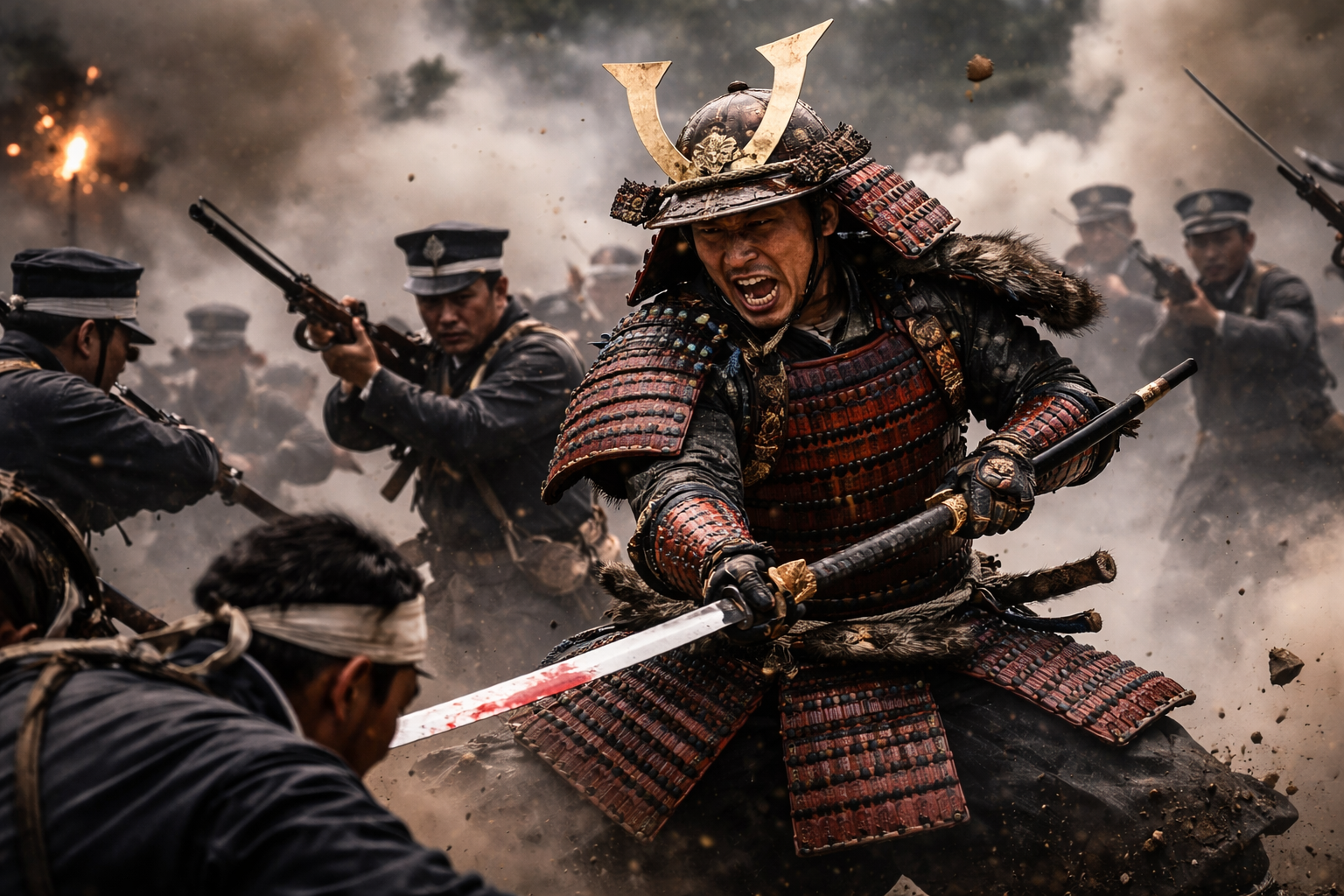
THE SATSUMA REBELLION
JAPAN
The last major samurai uprising is defeated.
HOUSE OF IWAMOTO
The triumph of the new state appears irreversible.
1878
THE FIRST JOURNEY
JAPAN
Modernisation gathers pace across the nation.
HOUSE OF IWAMOTO
Jirō undertakes the journey that will change the future of the House.
1879
THE STRENGTH OF THE HOUSE
JAPAN
Industry, trade and technology increasingly shape the future of the nation.
HOUSE OF IWAMOTO
The House takes its first steps into modern industry.
1879 - 1905
THE GROWTH
1879
THE JOURNEY BEGINS
JAPAN
The Meiji Restoration gathers momentum.
Modern institutions continue to replace the old order.
HOUSE OF IWAMOTO
Jirō begins the journey that will change the future of the House
1881
A NEW DIRECTION
JAPAN
The government promises a national constitution and representative assembly.
Debate over Japan's future intensifies.
HOUSE OF IWAMOTO
The House begins to look beyond agriculture and trade toward industry.
1885
THE MODERN STATE
JAPAN
A modern cabinet government is established.
Western methods increasingly influence administration and commerce.
HOUSE OF IWAMOTO
New ideas and new partnerships reshape the ambitions of the House.
1889
THE CONSTITUTION
JAPAN
The Meiji Constitution is promulgated.
Japan formally enters the age of constitutional government.
HOUSE OF IWAMOTO
The House adopts modern methods and prepares for future expansion.
1890
A NATION IN MOTION
JAPAN
The first Imperial Diet convenes.
Railways, factories and modern banking spread across the country.
HOUSE OF IWAMOTO
The first fruits of industrialisation begin to appear.
1895
A NEW POWER
JAPAN
Victory in the Sino-Japanese War transforms Japan's position in Asia.
National confidence grows.
HOUSE OF IWAMOTO
The House enters a period of growth and opportunity.
1900
A NEW GENERATION
JAPAN
Industrialisation reshapes daily life across the nation.
Cities expand and new industries emerge.
HOUSE OF IWAMOTO
A generation raised in the modern era begins to assume responsibility.
1902
THE ANGLO-JAPANESE ALLIANCE
JAPAN
Japan enters a formal alliance with Britain.
The nation gains international recognition and influence.
HOUSE OF IWAMOTO
The House looks outward with confidence and ambition.
1904
THE RUSSO-JAPANESE WAR
JAPAN
War erupts with Imperial Russia.
Japan confronts one of the great powers of the age.
HOUSE OF IWAMOTO
The House experiences both the opportunities and uncertainties of a nation at war.
1905
GROWING WITH THE STATE
JAPAN
Victory in the Russo-Japanese War astonishes the world.
Japan emerges as a major international power.
HOUSE OF IWAMOTO
The House stands firmly within Japan's industrial future.
1905-1930
THE EXPANSION
1906
THE FOREST TAKES ROOT
JAPAN
Victory over Russia reshapes Japan's confidence.
The nation enters a period of industrial expansion and international recognition.
HOUSE OF IWAMOTO
The first generation raised entirely within the ki begins to assume responsibility.
The Cooperative Incorporation Method starts to spread beyond the founding enterprises.
1910
A NETWORK OF HOUSES
JAPAN
Industry, transport and communications continue to transform daily life.
The modern economy expands rapidly.
HOUSE OF IWAMOTO
The House shifts from managing businesses to supporting networks of businesses.
Training and knowledge transfer become central priorities.
1912
THE END OF AN ERA
JAPAN
Emperor Meiji dies.
The Meiji era comes to a close and the Taishō era begins.
HOUSE OF IWAMOTO
The founders reflect on the distance travelled since the Restoration.
Attention begins to shift toward succession and continuity.
1914
A WORLD AT WAR
JAPAN
The Great War begins in Europe.
Japan joins the Allied powers and industrial demand accelerates.
HOUSE OF IWAMOTO
New opportunities emerge alongside new risks.
The House is tested by growth, scarcity and speculation.
1918
PROSPERITY AND UNREST
JAPAN
The Rice Riots reveal growing social and economic pressures.
Rapid change brings both opportunity and instability.
HOUSE OF IWAMOTO
Mutual support funds and cooperative purchasing demonstrate their value.
The House discovers that discipline during prosperity is as important as discipline during hardship.
1920
A NEW GENERATION
JAPAN
Modern life increasingly replaces the traditions of the previous century.
Urbanisation and industry reshape society.
HOUSE OF IWAMOTO
A generation with no memory of the old ie enters adulthood.
The ki becomes lived experience rather than theory.
1923
THE GREAT KANTŌ EARTHQUAKE
JAPAN
Earthquake and fire devastate Tokyo and Yokohama.
The nation confronts one of the greatest disasters in its modern history.
HOUSE OF IWAMOTO
The strength of distributed relationships becomes evident.
Enterprises support one another as communications, transport and infrastructure fail.
1925
REBUILDING
JAPAN
Recovery and reconstruction reshape the nation's largest cities.
Industrial development continues despite uncertainty.
HOUSE OF IWAMOTO
Credit, training and shared procurement allow smaller enterprises to modernise without surrendering independence.
The forest grows denser.
1928
A QUIET INFLUENCE
JAPAN
Economic growth continues, though signs of instability emerge.
Japan's influence abroad continues to expand.
HOUSE OF IWAMOTO
The Cooperative Incorporation Method reaches maturity.
The House becomes increasingly influential while remaining largely invisible.
1929
GATHERING CLOUDS
JAPAN
The effects of global financial instability begin to reach Japan.
Confidence gives way to uncertainty.
HOUSE OF IWAMOTO
The forest faces its first truly global storm.
The resilience of the ki is about to be tested.
1930
THE FOREST ENDURES
JAPAN
Economic pressures deepen as the world enters a period of upheaval.
The assumptions of the previous generation are challenged.
HOUSE OF IWAMOTO
The House enters a new era.
What began as an idea has become a living institution spanning generations, industries and communities.

the story is unfolding
1930 - 1945
THE TURMOIL
1930
THE STORM APPROACHES
JAPAN
Economic pressures deepen as the effects of global instability reach Japan.
Political uncertainty begins to challenge assumptions formed during the Taishō era.
HOUSE OF IWAMOTO
The Cooperative Incorporation Method faces its first sustained economic test.
The House focuses on stability, employment and continuity rather than expansion.
1931
THE MANCHURIAN INCIDENT
JAPAN
The Kwantung Army acts in Manchuria.
Military influence over national policy begins to grow.
HOUSE OF IWAMOTO
The House adopts a cautious posture.
Long-term resilience becomes a greater priority than short-term opportunity.
1932
A CHANGING NATION
JAPAN
Political violence and instability increase.
Public confidence shifts toward military leadership.
HOUSE OF IWAMOTO
The House quietly strengthens its welfare and mutual support systems.
Member enterprises are encouraged to reduce dependence on external markets.
1936
THE FEBRUARY TWENTY-SIX INCIDENT
JAPAN
An attempted coup by young military officers shocks the nation.
The influence of the military continues to expand.
HOUSE OF IWAMOTO
The founders recognise that politics can no longer be ignored.
The House commits itself to remaining useful without becoming political.
1940
THE INVISIBLE FOREST
JAPAN
National mobilisation accelerates.
The state seeks greater coordination of industry and resources.
HOUSE OF IWAMOTO
The House becomes increasingly difficult to define as a single institution.
Its strength resides in relationships rather than centralised ownership.
1941
THE PACIFIC WAR
JAPAN
War with the United States and Allied powers begins.
The nation enters a period of total mobilisation.
HOUSE OF IWAMOTO
The House works to preserve people, skills and enterprises wherever possible.
Continuity becomes the overriding objective.
1943
ENDURANCE
JAPAN
The demands of war increasingly affect daily life.
Resources become scarce and uncertainty grows.
HOUSE OF IWAMOTO
Mutual support networks sustain member enterprises through hardship.
The strength of the forest is measured not by growth but by survival.
1945
THE FOREST REMAINS
JAPAN
The war ends.
Japan faces devastation, occupation and reconstruction.
HOUSE OF IWAMOTO
Many trees have been damaged.
Some have fallen.
Yet the forest endures.
1945+
FROM THE ASHES
JAPAN
Under occupation.
Fighting for its existance in the modern world.
HOUSE OF IWAMOTO
The Cooperative Incorporation Method proves capable of surviving the greatest crisis in modern Japanese history.
the story is unfolding
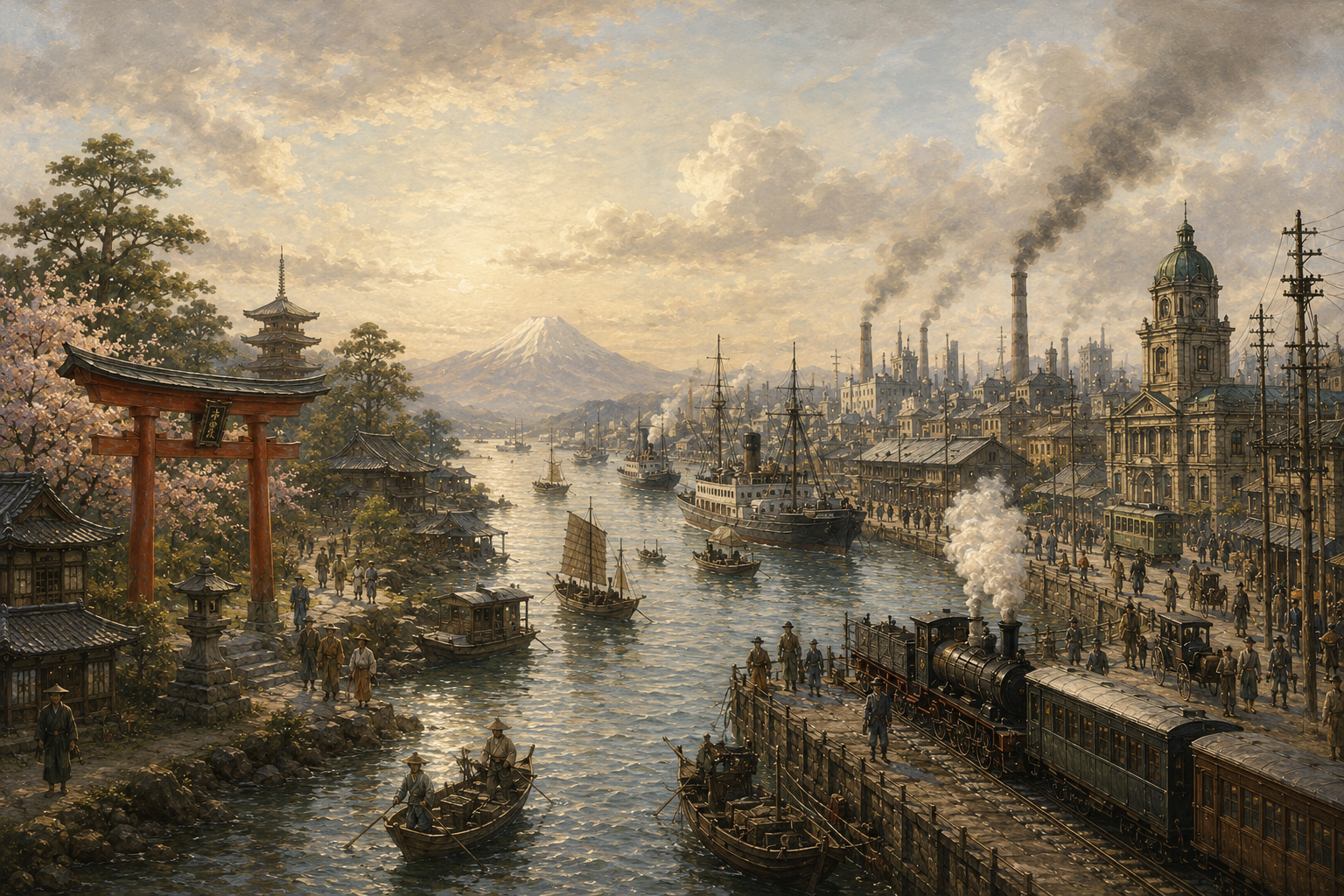
A NATION IN TRANSITION
THEMES
家
HOUSE - clan, family line, house, household, lineage
義
DUTY - obligation, moral responsibility, righteousness
血
FAMILY - ancestry, bloodline, kinship
変
CHANGE - adaption, alteration, evolution, transformation
産
INDUSTRY - creation, enterprise, production
革
REFORM - innovation, renewal, transformation
継
CONTINUITY - carry forward, endurance, inheritance, succession